| Detail | Information |
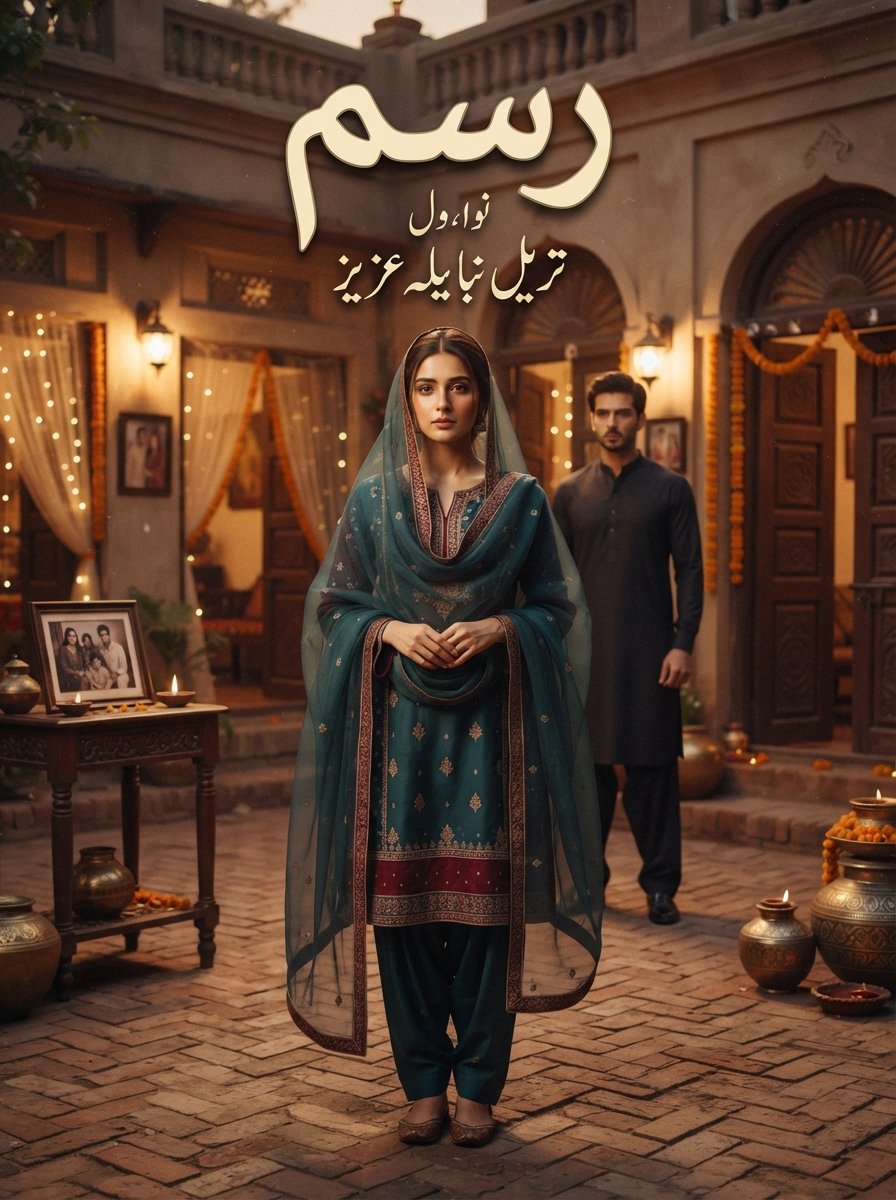
| Novel Name | Rasam |
| Writer | Nabila Aziz |
| Language | Urdu |
| Genre | Social, romantic, emotional fiction |
| Story Type | Forced marriage, social issues, family drama |
| Main Themes | Tradition, sacrifice, love, courage, family values |
| Publication | Kiran Digest, March 2010 |
| Collection | Jannat Do Qadam |
| Format | Urdu PDF and online reading |
| Popular For | Social message, emotional romance, traditional customs |
Read and explore Rasam by Nabila Aziz. A powerful Urdu social romance about an old family tradition, forced sacrifice, love, courage, and the struggle to break a harmful custom.
Rasam is a famous Urdu social romantic story by Nabila Aziz that focuses on a traditional custom and the painful consequences it can have on women and families. Current descriptions of the story identify its central conflict as an old practice in which a woman is expected to make a sacrifice so that her brother can live a long and healthy life. Haroon becomes the character who challenges this tradition.
The title Rasam means a custom, tradition, ritual, or established practice. This meaning is directly connected to the main idea of the story because the characters are forced to question whether every tradition deserves to continue simply because it has existed for generations.
Nabila Aziz uses the story to explore the emotional cost of blindly following customs. The novel does not simply present tradition as something positive or negative. Instead, it asks readers to consider what happens when a social practice demands the happiness, freedom, or sacrifice of an innocent person.
The romantic element gives the story another emotional dimension. Love becomes connected with difficult choices, family expectations, social pressure, and courage.
Rasam Novel Story Summary
Rasam revolves around an old tradition that has been followed for many years. According to the storyline described by current Urdu novel sources, this custom requires a woman to make a major personal sacrifice for the sake of her brother’s long life and health.
The tradition becomes more than a family practice because it begins to affect the personal life and future of the woman involved.
Instead of accepting the custom without question, the story examines its human consequences. The idea of sacrificing one person’s happiness for another person’s well being creates an emotional conflict that drives the narrative.
Haroon plays an important role in challenging this established practice. His character represents resistance against a tradition that causes suffering.
His decision to oppose the rasam becomes an important turning point in the story. Rather than accepting an old custom simply because it has been followed for years, he questions whether it is morally right.
The romantic side of the story develops alongside this social conflict. Love and family responsibilities become connected, forcing the characters to make difficult choices.
The story therefore combines romance with a meaningful social message. It encourages readers to think about the difference between respecting cultural values and blindly following harmful traditions.
Main Characters in Rasam
Haroon
Haroon is one of the central characters in Rasam and is particularly important to the story’s social conflict.
He refuses to accept the old custom without questioning it. His decision to challenge the rasam makes him a symbol of courage and resistance against harmful traditions.
His character also connects the social message with the romantic side of the story.
Female Protagonist
The female protagonist is at the heart of the novel’s central conflict because the traditional practice places the burden of sacrifice on a woman.
Her situation allows Nabila Aziz to explore the emotional impact of family expectations and social customs.
Through her circumstances, the story highlights the importance of dignity, choice, courage, and emotional freedom.
Family Members
The family members represent different attitudes toward tradition.
Some characters are influenced by established beliefs and social expectations, while others begin to question whether an old custom should continue when it causes suffering.
This difference of opinion creates much of the story’s emotional tension.
Major Themes in Rasam Novel
Tradition and Social Customs
Tradition is the central theme of Rasam.
The story examines how customs are passed from one generation to another and how people sometimes continue following them without questioning their consequences.
Nabila Aziz encourages readers to think about whether every tradition is automatically worthy of preservation.
Sacrifice
The story is strongly connected with the idea of sacrifice.
The central custom demands that a woman give up something important for the benefit of her brother. This creates the main emotional and moral conflict of the novel.
Women’s Choices
Rasam also highlights the position of women within traditional family structures.
When a woman’s future is decided according to an old custom, her personal wishes can easily be ignored.
The story brings attention to the importance of giving women a voice in decisions that directly affect their lives.
Love and Family
Love in Rasam is connected with family responsibilities.
The characters have to balance personal feelings with family expectations, creating difficult emotional situations.
Courage
Haroon’s decision to challenge the established custom makes courage an important theme.
The story shows that questioning an accepted practice can require considerable strength, especially when the practice has been followed for generations.
Social Awareness
Rather than focusing only on romance, Rasam encourages readers to think about social practices and their consequences.
This social element is one reason the story remains relevant to readers interested in meaningful Urdu fiction.
Rasam as a Forced Marriage Urdu Novel
Rasam is frequently described online as a forced marriage and romantic Urdu story.
The forced relationship element is connected with the larger conflict surrounding the traditional custom.
Marriage in this story is not presented simply as a romantic celebration. It becomes part of a social system in which family expectations can influence personal choices.
This makes the novel especially interesting for readers who enjoy Urdu stories involving forced marriage, family pressure, emotional conflict, and eventual resistance against unfair traditions.
Rasam as a Social Urdu Novel
The strongest feature of Rasam is its social message.
Many romantic Urdu novels focus primarily on the relationship between the hero and heroine. Rasam goes further by using its romantic storyline to discuss an established social custom.
The story asks readers to think about why certain traditions continue and whether they should remain unchanged when they cause emotional or personal harm.
This combination of romance and social commentary gives the story a meaningful quality.
Why Read Rasam by Nabila Aziz?
There are several reasons to explore Rasam by Nabila Aziz.
First, it combines romance with a strong social theme.
Second, the story focuses on a tradition that creates serious emotional consequences.
Third, Haroon’s decision to challenge the custom adds courage and conflict to the narrative.
Fourth, the story highlights the importance of personal choice and dignity.
Finally, readers who enjoy classic Urdu digest fiction may appreciate Rasam because it belongs to the tradition of social and romantic stories published through Pakistani monthly digests. A writer list records Rasam in Kiran Digest’s March 2010 issue.
Rasam in Jannat Do Qadam Collection
Rasam is also associated with Nabila Aziz’s Jannat Do Qadam collection.
The collection contains several stories and novelettes by Nabila Aziz, including Jannat Do Qadam, Ni Me Kamli Aan, Zaat e Be Sabaat, Hisab e Dil Rehne Do, and Rasam.
This makes Rasam particularly useful to readers who want to explore more of Nabila Aziz’s social and romantic writing.
Writing Style of Nabila Aziz
Nabila Aziz is associated with Urdu digest fiction that combines emotional relationships with social and family themes.
Her stories often place characters in situations where personal feelings conflict with social expectations.
Rasam is a good example of this approach because its romantic storyline is connected with a wider question about tradition, sacrifice, and individual choice.
The story is also relatively concise compared with long Urdu novels, making it suitable for readers who enjoy meaningful digest based fiction.
Rasam Novel PDF
Rasam by Nabila Aziz is currently listed by several Urdu novel websites as a PDF and online reading title. Kitab Nagri lists the file in PDF format with a reported size of approximately 5.10 MB, while Book Nagri lists a 5.10 MB version with 39 pages.
The story was originally published in Kiran Digest in March 2010, so different online scans or editions may have different formatting and page counts.
If you plan to provide the complete PDF on your website, make sure you have permission from the copyright holder. If you do not have distribution rights, it is safer to provide information about the novel and direct readers to an authorized source.
About Nabila Aziz
Nabila Aziz is an Urdu fiction writer known for social, romantic, and emotionally driven stories.
Her bibliography includes several works published through Pakistani Urdu digests. A published list of her works includes Jannat Do Qadam, Rasam, Rooh Ka Makeen, Hisab e Dil Rehne Do, Shart, Panah, Dar e Dil, and Raqs e Bismil among others.
Her stories often combine relationships with social situations, family expectations, emotional struggles, and questions about personal choices.
Rasam is one example of this style because it uses a romantic story to discuss the consequences of an established social custom.
What Does Rasam Mean?
The Urdu word Rasam means a custom, tradition, ritual, or established social practice.
The title is particularly meaningful because the entire conflict of the story is connected with a traditional practice that has been followed for generations.
By choosing this simple word as the title, Nabila Aziz immediately points readers toward the central question of the story: should every tradition be followed simply because it is old?
What Makes Rasam Different From Other Urdu Novels?
Rasam stands out because its romantic storyline is closely connected with a social issue.
Instead of presenting love as an isolated relationship, the story places its characters inside a family and cultural environment where traditions influence their decisions.
The conflict between individual happiness and social expectations gives the story emotional depth.
It also makes Rasam suitable for readers who enjoy social romantic Urdu novels rather than romance without a wider message.
Frequently Asked Questions
Who is the writer of Rasam novel?
Rasam is written by Nabila Aziz. Published novel lists and current Urdu novel websites identify Nabila Aziz as the author.
What is Rasam novel about?
Rasam is about an old tradition that requires a woman to make a major sacrifice for the benefit of her brother. Haroon challenges this tradition, creating the central social and emotional conflict.
Is Rasam a romantic Urdu novel?
Yes. Rasam is commonly described as a social romantic Urdu story.
Is Rasam a forced marriage novel?
Several Urdu novel listings categorize Rasam as a forced marriage story.
What does Rasam mean?
Rasam means custom, tradition, ritual, or an established social practice.
Who is Haroon in Rasam?
Haroon is an important character who challenges the old custom at the center of the story. His decision helps drive the novel’s social conflict.
When was Rasam by Nabila Aziz published?
A published Nabila Aziz novel list records Rasam in Kiran Digest, March 2010.
Is Rasam included in Jannat Do Qadam?
Yes. Rasam is listed as one of the stories included in Nabila Aziz’s Jannat Do Qadam collection.
Is Rasam available in PDF?
Yes. Current Urdu novel websites list Rasam in PDF format and offer online reading information.
Who should read Rasam?
Rasam is suitable for readers who enjoy social Urdu novels, romantic fiction, family drama, forced marriage stories, traditional customs, emotional conflict, and meaningful social themes.
Conclusion
Rasam by Nabila Aziz is a meaningful Urdu social romantic story that explores the conflict between old traditions and individual happiness. Its central custom places an unfair burden on a woman, while Haroon’s decision to challenge that practice creates the story’s strongest social and emotional conflict.
The combination of romance, family expectations, sacrifice, courage, and social awareness makes Rasam different from a simple love story. Readers who enjoy classic Urdu digest fiction with a strong social message can find this story especially interesting.
If you are looking for a Nabila Aziz novel, social Urdu novel, romantic Urdu story, forced marriage novel, or Urdu digest story, Rasam is a title worth exploring.
Related Novels
Dar e Dil Novel by Nabila Aziz